Resources
Everything you need to know about IBC containers
The Complete Guide to IBC Containers
Intermediate Bulk Containers (IBCs) have revolutionized how industries store, transport, and manage bulk liquids and granulated materials. These versatile containers bridge the gap between drums and tank trucks, offering an optimal solution for quantities ranging from 275 to 550 gallons.
Whether you are in chemical manufacturing, food processing, agriculture, or any industry requiring bulk liquid handling, understanding IBC specifications, materials, and best practices is essential for operational efficiency and regulatory compliance.
Our comprehensive resource center provides detailed guides on every aspect of IBC containers, from selecting the right size and material to understanding industry standards and maintenance best practices.
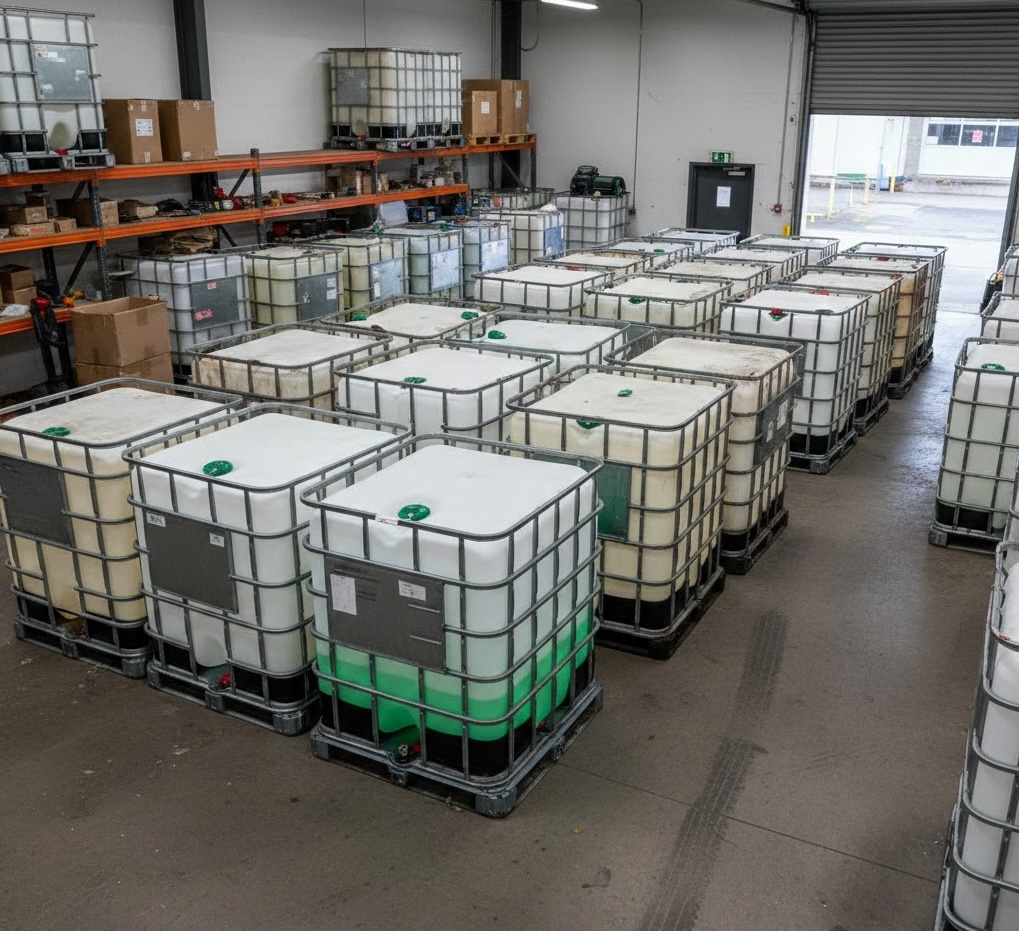
Modern IBC containers in a warehouse setting
Explore Our Resource Library
Size Guide
Complete specifications for all IBC container sizes including dimensions, capacity, and weight.
Material Types
Learn about HDPE, stainless steel, carbon steel, and other materials used in IBC construction.
IBC Grades
Understanding the grading system for used IBC containers from Grade A to Grade C.
Industry Standards
UN, DOT, and FDA regulations and certifications for IBC containers.
FAQ
Frequently asked questions about IBC containers, services, and purchasing.
IBC Industry at a Glance
Million IBCs in global circulation
Reuse rate for quality containers
Gallon standard capacity range
Potential lifespan with care
Understanding IBC Containers
What is an IBC Container?
An Intermediate Bulk Container (IBC), also known as a tote, is a pallet-mounted industrial container designed for storing and transporting bulk liquids, semi-solids, pastes, or solids. The term "intermediate" refers to their capacity, which falls between drums (55 gallons) and tank trucks (thousands of gallons).
The most common type is the composite IBC, which consists of a rigid HDPE (High-Density Polyethylene) inner bottle surrounded by a galvanized steel cage, mounted on a pallet base. This design combines chemical resistance with structural protection and ease of handling.
Key Components
- Inner Bottle/Tank: The primary containment vessel, typically HDPE plastic or stainless steel
- Protective Cage: Galvanized steel framework providing structural support and protection
- Pallet Base: Steel, plastic, or wood base enabling forklift and pallet jack handling
- Discharge Valve: Bottom-mounted valve (typically 2" NPT) for product dispensing
- Fill Cap: Top opening (usually 6" diameter) for filling and venting
Types of IBC Containers
| Type | Description | Best Applications | Capacity |
|---|---|---|---|
| Composite IBC | HDPE bottle in steel cage | General chemicals, food, water | 275-330 gal |
| Stainless Steel IBC | All-metal construction | Pharmaceuticals, high-purity | 200-550 gal |
| Carbon Steel IBC | Lined metal container | Oils, lubricants, non-corrosive | 200-550 gal |
| Flexible IBC (FIBC) | Woven fabric bulk bag | Dry goods, powders, granules | 500-4000 lbs |
Industry Applications
Chemical Manufacturing
Acids, solvents, and industrial chemicals
Food & Beverage
Oils, syrups, juices, and ingredients
Pharmaceutical
APIs, excipients, and purified water
Agriculture
Fertilizers, pesticides, and irrigation
Automotive
Lubricants, coolants, and cleaning agents
Cosmetics
Fragrances, oils, and base ingredients
History of IBC Containers
First bulk container concepts developed for military supply chains during WWII
Early composite IBCs introduced combining metal frames with plastic drums
HDPE bottle technology advances enable modern composite IBC design
UN certification standards established for hazardous materials transport
Widespread adoption across chemical, food, and pharmaceutical industries
Reconditioning and reuse programs expand globally
Smart IBC technology emerges with tracking and monitoring capabilities
Sustainability focus drives circular economy initiatives in IBC lifecycle
Quick IBC Facts
What is an IBC?
An Intermediate Bulk Container (IBC) is a reusable industrial container designed for storing and transporting bulk liquids and granulated substances. They typically hold 275-330 gallons and are forklift compatible.
Common Uses
IBCs are used across industries for storing water, chemicals, food ingredients, pharmaceuticals, oils, lubricants, paints, and many other liquid or semi-liquid products.
Lifespan
With proper care, IBC containers can last 5-10 years or more. Regular cleaning and inspection helps maintain their integrity and extends usable life.
Environmental Benefits
Reusing and recycling IBCs reduces plastic waste and the need for new container production, making them an environmentally responsible choice.
IBC Best Practices Overview
Storage Guidelines
- Store on level, stable surfaces
- Keep away from direct sunlight when possible
- Maintain proper temperature ranges
- Ensure adequate ventilation
- Follow stacking limits (typically 2-high when full)
- Keep valves closed and capped when not in use
Handling Safety
- Always use appropriate lifting equipment
- Inspect containers before each use
- Never exceed rated weight capacity
- Wear appropriate PPE for contents
- Secure containers during transport
- Follow OSHA and DOT guidelines
Maintenance Tips
- Clean containers promptly after emptying
- Inspect valves and gaskets regularly
- Check cage for damage or corrosion
- Verify pallet integrity before use
- Replace worn components promptly
- Document maintenance history
Need Expert Guidance?
Our team has decades of combined experience in the IBC industry. Whether you need help selecting the right containers, understanding compliance requirements, or optimizing your bulk liquid operations, we are here to help.