Frequently Asked Questions
Everything you need to know about IBC containers
Your IBC Questions Answered
We have compiled answers to the most common questions about IBC containers, covering everything from basic terminology to technical specifications, purchasing decisions to regulatory compliance.
Whether you are new to IBCs or an experienced user looking for specific information, this comprehensive FAQ resource provides clear, detailed answers to help you make informed decisions.
Cannot find the answer you are looking for? Contact our team directly and we will be happy to help with your specific questions.
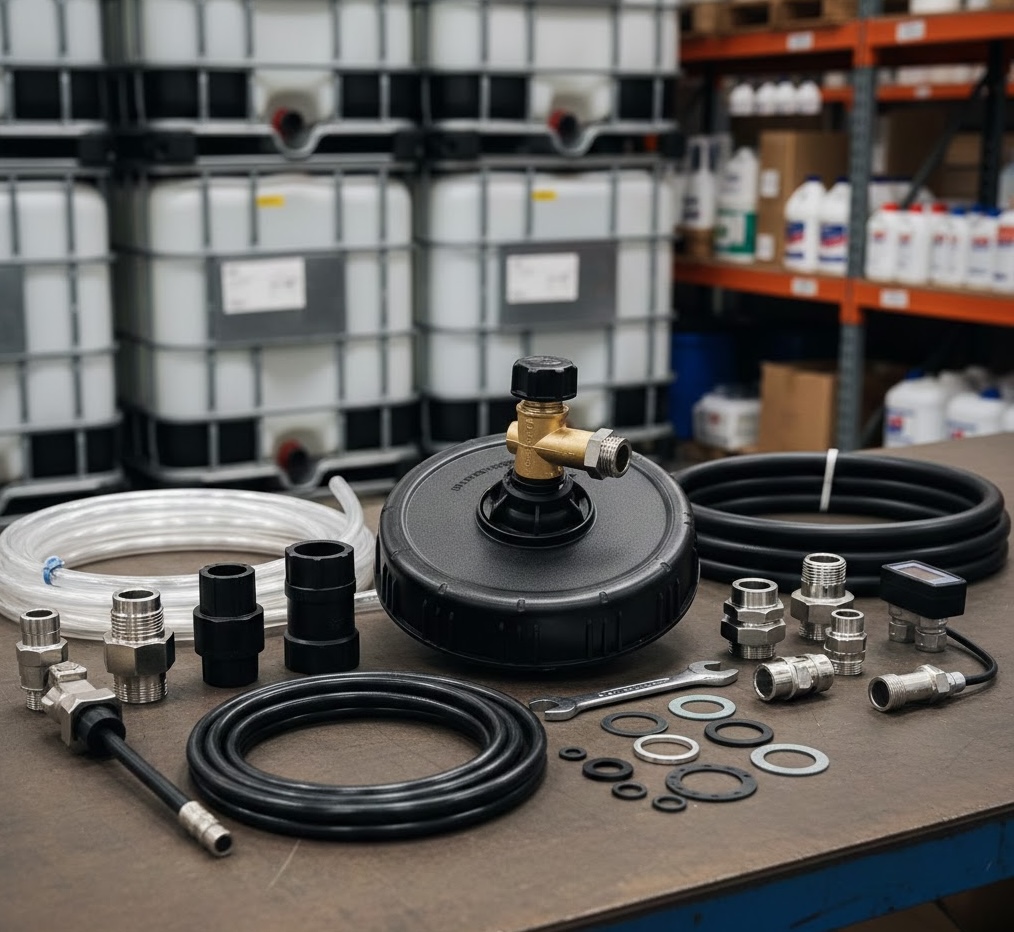
General IBC Questions
What does IBC stand for?
IBC stands for Intermediate Bulk Container. These are reusable industrial containers designed for storing and transporting bulk liquids and some granulated materials. They typically hold 275-330 gallons (1,000-1,250 liters) and are designed to be handled by forklifts and pallet jacks. The term "intermediate" refers to their capacity, which falls between drums (55 gallons) and large tanks or tank trucks.
What are the main components of an IBC?
A standard composite IBC consists of three main components: 1) The inner bottle or tank, usually made from HDPE (High-Density Polyethylene) plastic, which holds the liquid contents; 2) The protective cage, typically made from galvanized steel, which provides structural support and protection; 3) The pallet base, made from plastic, steel, or wood, which enables forklift and pallet jack handling. Additional components include the fill cap (usually 6" diameter), bottom discharge valve (typically 2" NPT), and gaskets/seals.
What are IBCs made of?
IBCs come in several material configurations. The most common is the composite IBC with an HDPE plastic inner bottle surrounded by a galvanized steel cage on a plastic or steel pallet. Other options include: all-stainless steel IBCs (304 or 316 grade) for food, pharmaceutical, or aggressive chemical applications; carbon steel IBCs with internal linings for petroleum products; and flexible IBCs (FIBCs or "big bags") made from woven polypropylene for dry goods. Each material offers different advantages for specific applications.
How long do IBC containers last?
With proper care and maintenance, IBC containers can last 5-10 years or more. Several factors affect lifespan: the materials stored (aggressive chemicals reduce life), UV exposure (sunlight degrades HDPE over time), handling practices (rough handling causes damage), storage conditions, and maintenance frequency. The HDPE bottle typically has a 5-year UN certification period, but can be recertified. Steel cages and pallets often outlast the bottles they support. Regular inspection and proper cleaning extend useful life significantly.
Can IBCs be stacked?
Yes, most IBCs are designed for stacking. Standard guidelines allow stacking 2-high when full (with liquid contents), and 4-high when empty. Important stacking rules include: always ensure containers are properly aligned; never exceed the rated stacking weight for your specific IBC model; check that lower containers have sufficient structural integrity; ensure the stacking surface is level and stable; and never stack damaged or non-uniform containers. Always refer to manufacturer specifications for your specific IBC type.
What is the weight of an IBC when full?
The weight varies by size and contents. A standard 275-gallon IBC weighs approximately 115-130 lbs empty. When filled with water (8.34 lbs/gallon), the total weight is approximately 2,300-2,500 lbs. A 330-gallon IBC weighs about 135-155 lbs empty and approximately 2,800-3,000 lbs when full of water. Contents denser than water will increase the total weight proportionally. Always verify the maximum gross weight rating on your specific IBC and ensure your handling equipment can safely manage the load.
How do I properly clean an IBC?
Cleaning requirements depend on the previous and next contents. Basic cleaning involves: rinsing with appropriate solvent (water for water-soluble products), using compatible cleaning agents, thorough drainage, and inspection for residues. For food-grade applications, a triple-wash protocol is typically required with documentation. Steps include: 1) Pre-rinse to remove bulk residue; 2) Detergent wash with hot water; 3) Sanitizing rinse; 4) Final fresh water rinse; 5) Drain and dry. Always ensure chemical compatibility between cleaning agents and the IBC materials.
Can I use any IBC for any product?
No, material compatibility is critical. Consider: chemical compatibility (HDPE works for most products, but aromatics and strong oxidizers may require different materials); previous contents (some products cannot follow others, especially for food applications); temperature requirements (standard HDPE limited to 140°F/60°C); regulatory requirements (food, pharmaceutical, and hazmat have specific requirements); and UN certification (required for hazardous materials transport). Always verify compatibility before use and maintain documentation of previous contents.
Purchasing & Pricing
What is the difference between new and used IBCs?
New IBCs have never been used and come with full manufacturer warranty and UN certification. They provide maximum service life and are required for certain applications. Used IBCs have been previously used but are inspected, graded, and often cleaned before resale. Used containers offer significant cost savings (typically 40-70% less than new) while still providing reliable performance for many applications. Used IBCs are available in grades A (like-new), B (good condition), and C (functional with visible wear).
What do the different grades mean?
Grade A means like-new condition with minimal wear - suitable for food and pharmaceutical applications. Grade B shows some wear but is fully functional - ideal for general industrial use. Grade C has visible wear but remains structurally sound - perfect for non-critical storage like rainwater collection. Reconditioned containers have been professionally restored with new valves, gaskets, and thorough cleaning to meet higher grade standards. Each grade offers a balance between condition and cost.
Do you offer bulk discounts?
Yes, we offer volume pricing for larger orders. Discounts typically start at 5-10 units and increase with quantity. We can also arrange recurring supply agreements for regular customers with even better pricing. Contact us with your requirements for a custom quote - we consider order size, frequency, delivery requirements, and long-term relationship potential when providing pricing.
What payment methods do you accept?
We accept multiple payment methods: Cash (for local pickups), business and personal checks, all major credit cards (Visa, Mastercard, American Express, Discover), wire transfers for larger orders, and ACH bank transfers. For established business customers with good credit, we may offer net terms (Net 15 or Net 30) upon credit approval. Contact us to discuss payment options for your specific situation.
How much does an IBC cost?
IBC pricing varies based on condition, size, and quantity. General ranges: New IBCs: $200-400+; Grade A (like-new used): $150-250; Reconditioned: $120-200; Grade B (good condition): $80-150; Grade C (functional): $40-80. Stainless steel IBCs are significantly more expensive, often $1,500-5,000+ depending on capacity and grade. Bulk orders receive discounts. Contact us for current pricing specific to your needs.
Do you buy used IBCs?
Yes, we purchase used IBCs in all conditions. We evaluate containers based on age, condition, previous contents, and current market demand. We offer: direct purchase at competitive prices, trade-in credit toward new or reconditioned IBCs, and free pickup for qualifying quantities in our service area. We also accept containers for recycling, even those not suitable for resale. Contact us with details about your containers for a quote.
Services
Do you pick up used IBCs?
Yes, we offer pickup services for used IBCs throughout the Pacific Northwest region. For qualifying quantities (typically 10+ units), pickup may be provided at no charge within our local service area. For smaller quantities or longer distances, a nominal fee may apply. We can also arrange pickup from multiple locations on a regular schedule for businesses generating used containers consistently. Contact us to arrange pickup and receive a quote for your containers.
What cleaning services do you offer?
We offer multiple cleaning levels: Basic rinse for simple product changeover; Standard wash with detergent and pressure washing; Food-grade triple wash following FDA protocols with certification; Chemical decontamination for specific product removal; Full reconditioning including cleaning, new valves, gaskets, and pressure testing. Certificates of cleaning are available for food-grade and pharmaceutical applications. We can customize cleaning protocols based on previous contents and intended use.
Do you deliver?
Yes, we offer delivery throughout the Pacific Northwest and can arrange shipping nationwide. Local Seattle-area delivery is available same-day or next-day for in-stock items. Regional delivery (within 200 miles) is typically scheduled within 3-5 business days. For longer distances, we work with freight carriers to arrange economical shipping. Delivery rates depend on quantity, location, and timing. We can also arrange will-call pickup from our facility if you prefer to arrange your own transportation.
Can you help with UN certification requirements?
Yes, we can supply UN-certified containers for hazardous material transport in various packing groups (X, Y, Z). We provide: new UN-certified IBCs with full documentation; recertified used IBCs that have passed testing; inspection services to verify existing certification status; guidance on certification requirements for your specific application; and documentation support for DOT compliance. Our staff understands UN certification requirements and can help ensure you get properly certified containers.
Do you offer IBC repair services?
Yes, we offer various repair and maintenance services: valve and gasket replacement; cage straightening and repair; pallet repair or replacement; bottle (inner container) replacement while reusing cage and pallet; leak repair for minor issues; and full reconditioning combining multiple repairs. Repairs are evaluated for cost-effectiveness - sometimes replacement is more economical than extensive repairs. Contact us for an assessment of your damaged IBCs.
Can you provide custom IBC solutions?
Yes, we can help with custom requirements including: specific material combinations (cage/bottle/pallet); custom valve configurations or sizes; heating/cooling jacketed IBCs; specialized fittings or adapters; color coding for product identification; custom labeling; and modified dimensions for special applications. For unique requirements, we work with manufacturers to source or fabricate solutions. Lead times for custom orders vary based on complexity.
Technical Questions
What is the standard valve size on IBCs?
Most IBCs have a 2" NPT (National Pipe Thread) bottom discharge valve, which is the industry standard for composite IBCs. Common valve types include: ball valves (most common, easy operation), butterfly valves (better flow control for thick products), and camlock fittings (quick connect/disconnect). The top fill opening is typically 6" (150mm) diameter with a screw-cap closure. Various adapter fittings are available to connect to different hose and piping configurations. Stainless steel IBCs may have sanitary fittings (tri-clamp) instead of NPT threads.
Are IBCs food-safe?
Yes, when properly specified and maintained. Food-grade IBCs use FDA-approved HDPE material meeting 21 CFR 177.1520. Requirements for food use include: virgin or certified food-grade HDPE; no previous non-food contents; proper cleaning between uses (typically triple-wash); temperature control if required by the product; documentation and traceability; and storage in sanitary conditions. We offer food-grade certified containers and cleaning services with appropriate documentation.
Can IBCs handle heated products?
Standard HDPE IBCs are rated for contents up to approximately 140°F (60°C). At higher temperatures, the plastic may soften and deform under the product weight. For hotter materials, options include: temperature-rated HDPE (some grades rated to 160°F); stainless steel IBCs (rated to 300°F+ depending on gasket materials); insulated IBCs to maintain temperature; and heated IBCs with integrated heating elements or jacketed designs. Always verify temperature ratings before filling with hot products.
What is the maximum filling temperature for HDPE IBCs?
The general rule is not to exceed 140°F (60°C) for standard HDPE. However, this depends on specific factors: the duration of exposure (brief exposure to higher temps may be acceptable); the product specific gravity (heavier products increase stress); ambient storage temperatures; and the age and condition of the container. For products above 120°F, consult the manufacturer specifications for your specific IBC. Cool products before filling when possible to extend container life.
How do I prevent contamination between batches?
Contamination prevention requires: proper cleaning protocols matched to products (basic rinse to full decontamination); dedicated containers for incompatible products; documentation of previous contents; visual inspection before filling; product compatibility verification; proper storage between uses; and sealed caps to prevent environmental contamination. For sensitive applications, consider using "dedicated" IBCs that only handle one product type, or disposable liners.
What should I do with a damaged IBC?
For damaged IBCs: First, safely remove or contain any remaining contents. Assess the damage type and severity - minor valve or gasket issues are easily repaired, while structural damage to the bottle may require replacement. Contact us about repair possibilities or recycling options. Even severely damaged IBCs have value - the steel cage and pallet can be recycled, and we can often reuse components. Never attempt to use a damaged IBC for hazardous materials. We offer pickup service for damaged containers and provide environmentally responsible disposal.
How do I calculate how many IBCs I need for my application?
Calculate your needs based on: daily/weekly/monthly volume requirements; storage time (how long product sits in IBCs); shipping lead times; safety stock requirements; and seasonal variations. Formula: Daily volume (gallons) x Days of storage needed / IBC capacity = Minimum IBCs needed. Add 10-20% for rotation and maintenance. Consider transit IBCs separately from storage IBCs. We can help you optimize your IBC fleet size for efficiency and cost.
Safety & Compliance
What safety precautions should I take when handling IBCs?
Key safety precautions include: always use appropriate lifting equipment (forklift, pallet jack) rated for the load; inspect containers before each use for damage or leaks; wear appropriate PPE for the specific contents; ensure proper ventilation when handling volatile products; follow OSHA guidelines for hazardous materials; secure containers during transport; maintain Safety Data Sheets (SDS) for all products stored; train all personnel on proper handling procedures; and have spill containment equipment readily available.
Do I need special permits for storing IBCs?
Permit requirements depend on the contents and quantities. Considerations include: fire codes for flammable materials (may require permits above certain quantities); environmental regulations for hazardous substances; zoning restrictions on industrial storage; building codes for indoor storage; secondary containment requirements; and EPA or state environmental permits for certain chemicals. Consult your local fire marshal and environmental agency for specific requirements in your jurisdiction.
What are the requirements for transporting hazardous materials in IBCs?
Hazmat transport requirements include: UN-certified IBCs appropriate for the hazard class and packing group; proper DOT labeling and placarding; completed shipping papers with all required information; emergency response information available; trained personnel (DOT hazmat training); proper securing in the transport vehicle; and compliance with quantity limitations. Failure to comply with hazmat transportation regulations can result in significant fines and liability. Consider working with a hazmat-trained logistics provider.
What is secondary containment and do I need it?
Secondary containment is a system to capture spills or leaks, typically a bermed area, containment pallet, or containment room capable of holding 110% of the largest container volume or 10% of total stored volume, whichever is greater. Requirements vary by: the products stored (especially hazardous materials); federal EPA regulations (SPCC for oil); state environmental regulations; local fire codes; and industry-specific requirements. Secondary containment is generally required for hazardous materials storage and strongly recommended for all bulk liquid storage.
Environmental & Sustainability
Are IBCs recyclable?
Yes, IBCs are highly recyclable. The HDPE bottle can be recycled into various plastic products or regranulated for new container production. Steel cages and pallets are readily recyclable through metal recyclers. Plastic pallets can be recycled with other HDPE plastics. Wood pallets can be repaired, reused, or converted to mulch/biomass. The industry average recycling rate for IBCs exceeds 85%. We participate in IBC recycling programs and can ensure proper recycling of containers that have reached end of life.
How can I reduce my environmental impact with IBCs?
Sustainability best practices include: reuse containers when possible (multiple trips before recycling); purchase reconditioned containers instead of new; properly maintain IBCs to extend service life; use appropriate sizing to minimize partial-fill shipments; establish return programs with suppliers; properly clean containers to enable reuse; recycle end-of-life containers responsibly; and consider reusable vs. single-trip containers. Many companies are tracking IBC reuse metrics as part of sustainability reporting.
What is the carbon footprint of IBCs vs. drums?
IBCs offer significant environmental advantages over drums: approximately 1/5 the packaging material per gallon of product; typically 5+ reuse cycles vs. 1-2 for steel drums; 40% less weight per gallon shipped (reducing transport emissions); more efficient truck loading (reducing trips); and easier recycling at end of life. Studies suggest IBCs can reduce packaging-related carbon emissions by 50-70% compared to drum-based systems for equivalent volumes.
Quick Reference Guide
Standard Sizes
- 275 Gallon (1,041 L) - Most common
- 330 Gallon (1,249 L) - Extended height
- 264 Gallon (1,000 L) - Metric standard
- 550 Gallon (2,082 L) - Maximum capacity
Common Materials
- HDPE - General purpose, most common
- 304 Stainless Steel - Food/pharma
- 316 Stainless Steel - Aggressive chemicals
- Carbon Steel - Petroleum products
Grade Summary
- Grade A - Like-new, food-grade capable
- Grade B - Good condition, industrial use
- Grade C - Functional, non-critical storage
- Reconditioned - Restored to higher grade
Standard Dimensions
- Footprint: 40" x 48" (standard pallet)
- Height: 45-53" (varies by capacity)
- Fill opening: 6" diameter
- Discharge valve: 2" NPT standard
Weight Guidelines
- 275 gal empty: 115-130 lbs
- 275 gal full (water): 2,300-2,500 lbs
- 330 gal empty: 135-155 lbs
- 330 gal full (water): 2,800-3,000 lbs
Key Temperatures
- HDPE max: 140°F (60°C)
- HDPE min: -40°F (-40°C)
- Stainless steel max: 300°F+ (149°C+)
- Hot fill limit: 120°F recommended
Still Have Questions?
Cannot find the answer you are looking for? Our team is happy to help with any questions about IBC containers, our products, services, or your specific application.