IBC Material Types
Understanding the materials used in IBC container construction
Choosing the Right IBC Materials
The material composition of an IBC container directly impacts its chemical compatibility, temperature range, durability, and cost. Understanding these materials is essential for selecting containers that will safely and effectively store your products.
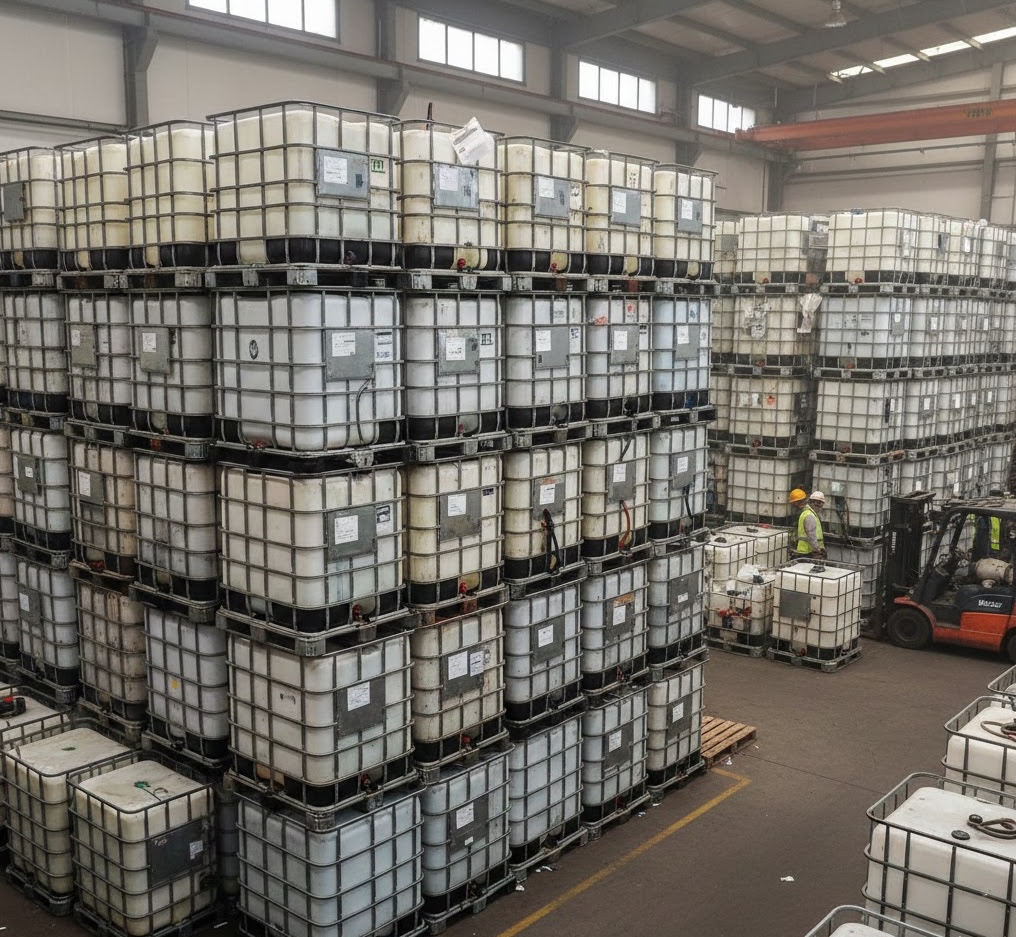
Modern IBCs use various materials for their three main components: the inner bottle/tank, the protective cage, and the pallet base. Each component can be made from different materials to optimize performance for specific applications.
This comprehensive guide covers all common IBC materials, their properties, advantages, limitations, and best applications to help you make informed decisions.
Bottle/Tank Materials
HDPE (High-Density Polyethylene)
PlasticThe most common IBC bottle material, offering excellent chemical resistance and durability at an economical price point. HDPE is a thermoplastic polymer with a high strength-to-density ratio, making it ideal for bulk liquid storage.
Advantages
- Excellent chemical resistance to most acids, bases, and solvents
- FDA approved grades available for food contact
- UV stabilized options for outdoor storage
- Lightweight compared to metal alternatives
- Cost-effective for most applications
- Fully recyclable material
- Good impact resistance
- Does not dent or corrode
Limitations
- Not suitable for temperatures above 140°F (60°C)
- Can absorb some chemicals over extended exposure
- Limited lifespan in continuous UV exposure
- Not compatible with strong oxidizers
- May degrade with aromatic hydrocarbons
Best For
Water, most chemicals, food products, general industrial use
Technical Specs
Density: 0.93-0.97 g/cm³
Max Temp: 140°F (60°C)
Min Temp: -40°F (-40°C)
304 Stainless Steel
MetalPremium material offering excellent corrosion resistance for food, beverage, pharmaceutical, and chemical applications. 304 is the most widely used austenitic stainless steel, containing 18% chromium and 8% nickel.
Advantages
- Excellent corrosion resistance in most environments
- Easy to clean and sanitize thoroughly
- FDA/NSF approved for food contact
- Long service life (20+ years)
- Temperature resistant up to 1500°F
- Does not absorb products or flavors
- Resistant to rust and oxidation
- Maintains structural integrity over time
Limitations
- Higher initial cost than plastic options
- Heavier weight increases shipping costs
- Susceptible to chloride stress corrosion cracking
- Can pit in marine or high-salt environments
- Not ideal for strong acids
Best For
Food & beverage, pharmaceuticals, cosmetics, specialty chemicals
Technical Specs
Density: 8.0 g/cm³
Max Temp: 1500°F (816°C)
Min Temp: -320°F (-196°C)
316 Stainless Steel
MetalSuperior corrosion resistance compared to 304, ideal for aggressive chemicals and marine environments. 316 contains molybdenum which significantly enhances resistance to chloride pitting and crevice corrosion.
Advantages
- Superior corrosion resistance to 304
- Resistant to chlorides and salt spray
- Marine environment compatible
- Ideal for high-purity applications
- Excellent for acids and aggressive chemicals
- Better pitting resistance
- Higher creep strength at elevated temperatures
Limitations
- Highest cost option among common materials
- Heavier than 304 stainless
- Overkill for non-corrosive applications
Best For
Aggressive chemicals, acids, marine environments, high-purity pharmaceutical applications
Technical Specs
Density: 8.0 g/cm³
Max Temp: 1500°F (816°C)
Min Temp: -320°F (-196°C)
Carbon Steel
MetalDurable and cost-effective option for non-corrosive materials and applications where stainless is not required. Carbon steel IBCs are typically lined or coated to provide corrosion protection.
Advantages
- Strong and highly durable
- Lower cost than stainless steel
- Good for non-corrosive materials
- Can be lined with various coatings
- High load bearing capacity
- Repairable and weldable
Limitations
- Requires coating or lining for corrosion protection
- Will rust without protective treatment
- Not suitable for food contact (unlined)
- Heavier than plastic alternatives
- Limited chemical compatibility without lining
Best For
Oils, lubricants, non-corrosive chemicals, industrial applications, petroleum products
Technical Specs
Density: 7.85 g/cm³
Max Temp: 750°F (400°C) typical
Min Temp: -40°F (-40°C)
Composite/Hybrid
CombinationCombines materials like HDPE bottles with various cage and pallet materials for optimal performance. This is the most common IBC configuration, offering the chemical resistance of plastic with the structural support of metal.
Advantages
- Best of multiple materials
- Customizable configurations
- Cost optimization possibilities
- Replaceable components extend life
- Wide range of available configurations
- Bottle can be replaced independently
Limitations
- Multiple material considerations for disposal
- Component compatibility must be verified
- May require different maintenance approaches
Best For
General industrial use, custom applications, specific performance requirements
Technical Specs
Density: Varies by configuration
Max Temp: 140°F (60°C) for HDPE bottle
Min Temp: -40°F (-40°C)
Chemical Compatibility Chart
This chart provides general guidance on material compatibility with common chemicals. Always verify compatibility for your specific application and concentration.
| Chemical | HDPE | 304 SS | 316 SS | Carbon Steel |
|---|---|---|---|---|
| Water | Excellent | Excellent | Excellent | Poor |
| Sulfuric Acid (<50%) | Good | Fair | Good | Poor |
| Hydrochloric Acid | Excellent | Poor | Fair | Poor |
| Sodium Hydroxide | Good | Excellent | Excellent | Poor |
| Acetic Acid | Excellent | Good | Excellent | Poor |
| Ethanol | Good | Excellent | Excellent | Good |
| Vegetable Oils | Excellent | Excellent | Excellent | Good |
| Gasoline | Fair | Excellent | Excellent | Good |
| Bleach (NaOCl) | Good | Fair | Good | Poor |
| Ammonia | Good | Excellent | Excellent | Fair |
Cage Materials
Galvanized Steel
Most common cage material. Hot-dip galvanizing provides excellent corrosion resistance. Cost-effective and durable.
Stainless Steel
Premium option for food processing or corrosive environments. Easier to clean and sanitize.
Powder-Coated Steel
Enhanced appearance with additional corrosion protection. Available in various colors for identification.
Aluminum
Lightweight alternative for weight-sensitive applications. Naturally corrosion-resistant.
Pallet Materials
HDPE Plastic
Lightweight, hygienic, and common for food-grade applications. Easy to clean and does not harbor bacteria.
Galvanized Steel
Heavy-duty option with excellent stacking capability. Provides superior durability in demanding environments.
Wood
Economical option but not suitable for food or international export (ISPM 15 requirements).
Composite
Combines benefits of plastic and metal. May use reinforced plastic or metal frame with plastic decking.
Material Selection Guide
For Food & Beverage Products
Recommended: Food-grade HDPE for most applications, or 304/316 Stainless Steel for products requiring high cleanability or elevated temperatures. Ensure FDA compliance and verify previous contents history.
For Chemicals & Solvents
Check chemical compatibility carefully. HDPE handles most acids and bases well. Use stainless steel for strong oxidizers, aromatics, or elevated temperatures. Always verify compatibility with your specific chemical and concentration.
For Pharmaceutical Applications
316 Stainless Steel is preferred for its superior corrosion resistance and ease of validation. Some applications may use pharmaceutical-grade HDPE with appropriate documentation and cleaning protocols.
For Cost-Sensitive Applications
Standard HDPE composite IBCs offer the best value for compatible products. Consider used or reconditioned containers for additional savings. Carbon steel may be appropriate for non-corrosive industrial products.
Frequently Asked Questions
How do I choose between HDPE and stainless steel IBCs?
Consider your product compatibility, temperature requirements, and budget. HDPE is ideal for most chemicals at ambient temperatures and is more economical. Stainless steel is necessary for high temperatures, products that absorb into plastic, or when maximum cleanability is required (food/pharma).
Can HDPE IBCs be used for food products?
Yes, when specified as food-grade. Food-grade HDPE meets FDA 21 CFR 177.1520 requirements for food contact. Always verify the container is certified for food use and has not previously stored non-food materials.
What is the difference between 304 and 316 stainless steel?
316 contains molybdenum (2-3%) which provides significantly better resistance to chlorides, salt, and acids. Use 316 for marine environments, chloride-containing products, or aggressive acids. 304 is sufficient for most food, beverage, and mild chemical applications.
Why do composite IBCs use different materials for the bottle and cage?
This design optimizes cost and performance. The HDPE bottle provides chemical resistance at low cost, while the steel cage provides structural protection and stackability. The combination is more economical than all-metal construction while offering excellent performance.
How long do different IBC materials last?
HDPE bottles typically last 5-10 years depending on contents and UV exposure. Stainless steel IBCs can last 20+ years with proper maintenance. Galvanized cages typically outlast the bottles they protect. Regular inspection and maintenance extend lifespan for all materials.
Need Material Recommendations?
Not sure which material is right for your application? Our experts can help you select the optimal IBC configuration for your specific products and requirements.