IBC Size Guide
Complete specifications for all container sizes
Understanding IBC Dimensions
Selecting the right IBC size is crucial for operational efficiency, storage optimization, and transportation logistics. While 275 and 330 gallon sizes dominate the market, understanding all available options helps you make informed decisions for your specific applications.
IBC dimensions are standardized to ensure compatibility with handling equipment, shipping containers, and storage systems. The common 40" x 48" footprint aligns with standard pallet dimensions, making IBCs seamlessly integrate into existing material handling workflows.
This comprehensive guide covers all standard IBC sizes, detailed specifications, compatibility information, and selection criteria to help you choose the optimal containers for your needs.
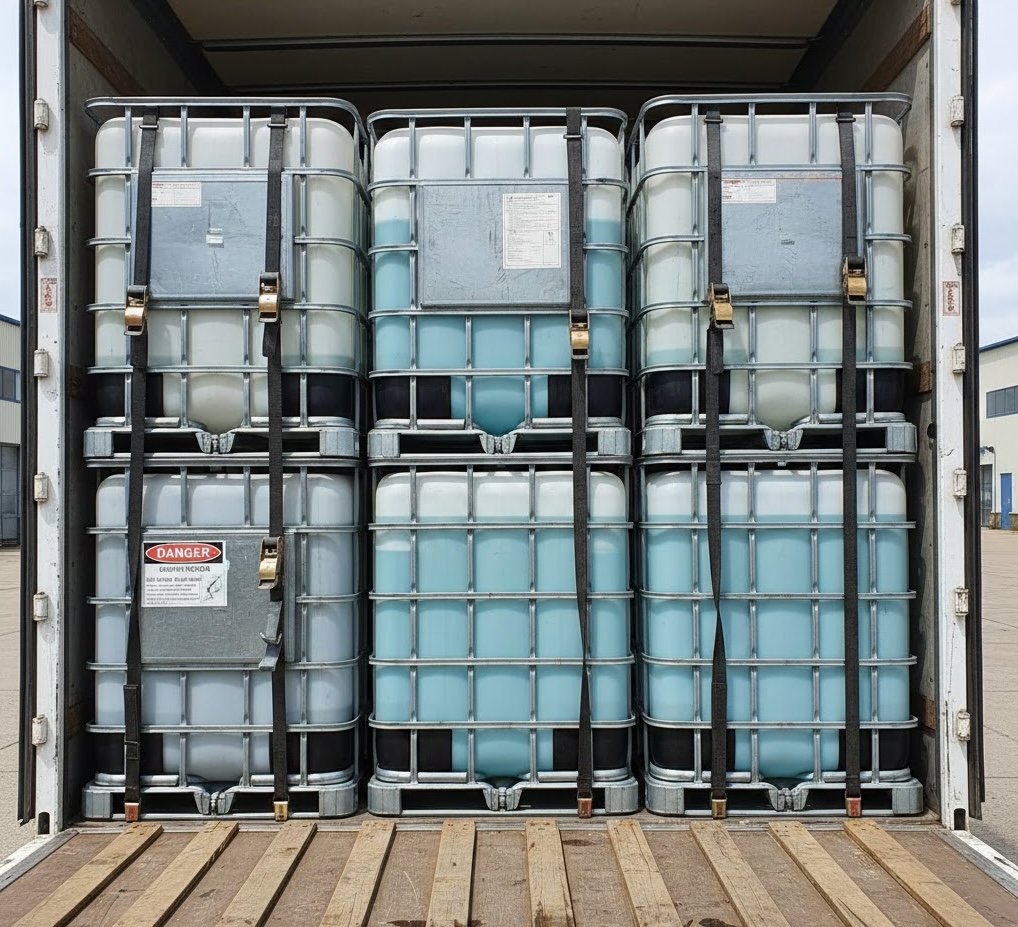
Standard IBC Sizes Comparison
| Size | Dimensions (L x W x H) | Empty Weight | Full Weight | Stackable |
|---|---|---|---|---|
275 Gallon 1,041 Liters | 40" x 48" x 46" | 120 lbs | 2,400 lbs | 2 high |
330 Gallon 1,249 Liters | 40" x 48" x 53" | 145 lbs | 2,900 lbs | 2 high |
550 Gallon 2,082 Liters | 44" x 48" x 72" | 200 lbs | 4,800 lbs | 1 high only |
264 Gallon 1,000 Liters | 40" x 48" x 45" | 115 lbs | 2,300 lbs | 2 high |
Visual Size Comparison
275 Gallon
1,041 Liters
330 Gallon
1,249 Liters
550 Gallon
2,082 Liters
Detailed Specifications
275 Gallon (1,041L) - Standard
330 Gallon (1,249L) - Extended
264 Gallon (1,000L) - Metric Standard
Transport Capacity Guide
Understanding how many IBCs fit in different transport modes is essential for logistics planning. The following table shows approximate capacity for 275-gallon IBCs (adjust for larger sizes).
| Vehicle Type | Single Layer | Double Stacked | Max Payload |
|---|---|---|---|
| 20ft Container | 10-12 IBCs | 20-24 IBCs | 44,000 lbs |
| 40ft Container | 20-24 IBCs | 40-48 IBCs | 59,000 lbs |
| 53ft Trailer | 18-20 IBCs | 36-40 IBCs | 45,000 lbs |
| Flatbed Truck | 12-14 IBCs | 24-28 IBCs | 48,000 lbs |
| Straight Truck | 6-8 IBCs | 12-16 IBCs | 26,000 lbs |
Note: Actual capacity depends on product weight, stacking capability, and regulatory limits. Always verify weight restrictions for your specific route and vehicle.
Compatibility Information
Forklift Compatibility
All standard IBCs are designed for forklift handling with 4-way entry pallets. Fork openings are typically 3.5" x 9". Standard forklifts with 48" forks can handle all common IBC sizes.
- Minimum fork length: 42 inches recommended
- Fork spacing: 20-24 inches optimal
- Lift capacity needed: 3,000-5,000 lbs
- Mast height: Consider for stacking operations
Pallet Jack Access
Standard IBCs accommodate manual and electric pallet jacks. Check pallet opening dimensions for compatibility with your equipment.
- Standard pallet jack width: 20-27 inches
- Entry height clearance: 3-3.5 inches
- Weight capacity: Most jacks handle standard IBCs
- Ensure smooth, level floor surfaces
Stacking Guidelines
Most IBCs can be stacked 2-high when full, 4-high when empty. Always check manufacturer specifications and never exceed rated limits.
- Full containers: Maximum 2 high
- Empty containers: Maximum 4 high
- Ensure perfect alignment when stacking
- Check cage integrity before stacking
Transport Considerations
275 and 330 gallon IBCs fit efficiently in standard shipping containers and truck trailers. Plan loads carefully for weight distribution.
- 20ft container: 10-12 IBCs single layer
- 40ft container: 20-24 IBCs single layer
- 53ft trailer: 18-20 IBCs floor loaded
- Always secure loads properly
Size Selection Guide
| Your Need | Recommended Size | Reason |
|---|---|---|
| Maximum storage efficiency | 275 Gallon | Standard footprint allows optimal warehouse density |
| Higher volume per unit | 330 Gallon | 20% more capacity with same floor space |
| International shipping | 264 Gallon (1,000L) | Metric standard for global compatibility |
| Large batch processing | 550 Gallon | Maximum single-container volume |
| Mixed-product operations | 275 Gallon | Most versatile and widely available |
Frequently Asked Questions
Why are IBC dimensions standardized?
Standard dimensions ensure compatibility with forklifts, pallet jacks, shipping containers, and storage racking. The 40" x 48" footprint matches standard pallet dimensions used throughout North America.
Can IBCs fit through standard doorways?
Yes, standard IBCs (40" x 48") fit through most commercial doorways (typically 36" minimum). However, you may need to angle the IBC or use a wider entrance for 550-gallon models.
What is the difference between 275 and 330 gallon IBCs?
Both have the same footprint (40" x 48"), but the 330-gallon version is about 7" taller. This provides 20% more capacity without increasing floor space usage.
How much does product weight affect handling?
Significantly. Water weighs about 8.34 lbs/gallon, so a full 275-gallon IBC of water weighs around 2,300 lbs. Denser products increase this substantially - always verify equipment capacity.
Need Help Choosing a Size?
Our team can help you select the right IBC size for your specific application, storage constraints, and transportation requirements.